


Motor Overload Fault:Characteristics And Cause Analysis
Sep 18, 2026
Leave a message
Motor overload fault refers to a condition where the actual operating power of the motor exceeds its rated power. Manifestations include severe motor overheating, reduced speed or even stalling; dull motor noise accompanied by vibration. If the load fluctuates drastically, the motor speed may rise and fall erratically.
Causes include single-phase operation, operating voltage outside the allowable rated range, and severe speed reduction or stall caused by mechanical faults of the motor.
Overloaded operation seriously shortens the service life of the motor. The direct symptom of overload is increased motor current, which results in intense heating of the motor windings. The winding insulation deteriorates and fails under excessive thermal load.
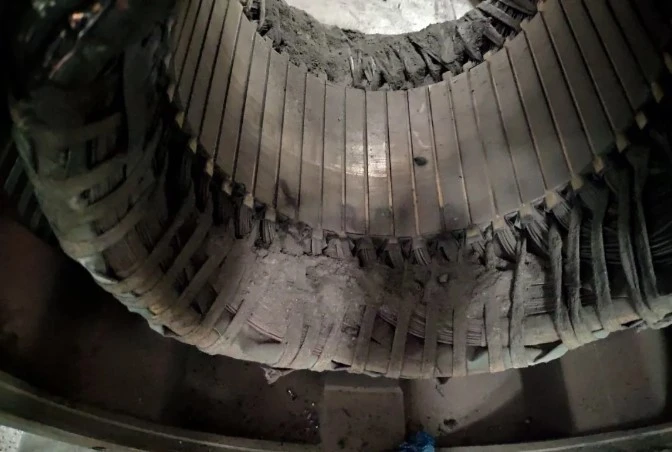
Motor overload can be judged by the actual condition of windings after overload operation. Typical signs: all winding insulation turns black, brittle and crumbly; in severe cases, the insulation carbonizes completely into powder. The insulation coating of magnet wires suffers heavy ageing, with darkened enamel film or even full peeling in serious cases. For mica-wound and silk-covered magnet wires, separation occurs between insulation and conductors.
Different from single-phase, inter-turn, earth and inter-phase faults, overload damage features overall winding ageing rather than local defects. Secondary symptoms include heating of the bearing system. An overloaded motor emits strong burning odour, and thick black smoke in severe cases.
Improper operations during inspection tests or factory tests may trigger motor overload faults.
In inspection tests, overload tends to occur during locked-rotor tests, wiring and voltage application. A locked-rotor test, also known as short-circuit test, keeps the rotor stationary. If the test lasts too long, the motor windings will burn out due to overheating. If the capacity of test equipment is insufficient and the motor has a long starting period (the so-called low-speed creeping state), winding burnout caused by overheating may also occur. A common wiring error is connecting a motor designed for star connection in delta connection while applying the rated voltage specified for star connection, which quickly overheats and burns the windings. Another frequent issue arises when testing motors rated for non-power frequency with power-frequency-only test power supplies; excessive voltage will burn the windings.
Locked-rotor tests are also prone to motor overload fault in type tests. Compared with factory tests, type tests require longer test duration and more data sampling points. Overload may still happen if the motor performance is substandard or operation errors exist. In addition, improper loading or insufficient load capacity of the motor during load tests can also lead to overload defects.
Theoretically, the motor operates safely when loaded at rated power. However, both excessively high and low supply voltage will cause winding overheating and burnout. A sudden load increase that sharply reduces motor speed or stalls the motor is a common overload scenario during operation, especially under impact loads.
Another scenario is rotor-stator rubbing and stall caused by bearing system faults, which will also lead to motor burnout from overload.