

How does the type of enclosure affect an ie2 electric motor?
May 21, 2026
Leave a message
As an IE2 electric motor supplier, I've seen firsthand how the type of enclosure can significantly impact the performance, longevity, and efficiency of these motors. Let's dive into how different enclosures play a role in an IE2 electric motor's operation.
Open Drip-Proof (ODP) Enclosures
ODP enclosures are pretty common in industrial settings. They're designed to protect the motor from falling liquids and solids. The way it works is that the enclosure has openings that allow air to circulate freely through the motor. This is great for cooling, as the motor can dissipate heat more effectively.
For example, in a factory where there's a lot of machinery running, an IE2 motor with an ODP enclosure can handle the normal operating temperatures well. The open design helps prevent overheating, which is a major factor in motor failure. However, the downside is that these enclosures aren't suitable for environments where there's a lot of dust, dirt, or moisture. If the motor is exposed to these elements, it can lead to damage over time.
Totally Enclosed Fan-Cooled (TEFC) Enclosures
TEFC enclosures are a step up in terms of protection. They're completely sealed, with a fan on the outside that blows air over the motor to cool it. This type of enclosure is ideal for environments where there's a lot of dust, dirt, or moisture.
Let's say you're running a woodworking shop. There's sawdust flying everywhere, and an ODP motor would quickly get clogged up. A TEFC motor, on the other hand, can keep running smoothly because the sealed enclosure protects it from the sawdust. The fan on the outside ensures that the motor stays cool, even when it's working hard.
One thing to keep in mind is that TEFC motors tend to be a bit more expensive than ODP motors. But the extra cost is worth it if you need the added protection.

Totally Enclosed Non-Ventilated (TENV) Enclosures
TENV enclosures are similar to TEFC enclosures in that they're completely sealed. However, they don't have a fan on the outside. Instead, they rely on the motor's surface area to dissipate heat.
These enclosures are often used in applications where space is limited or where the motor doesn't need a lot of cooling. For example, in a small machine where the motor isn't running at full capacity all the time, a TENV motor might be a good choice.
The main advantage of TENV enclosures is that they're more compact and quieter than TEFC motors. But they're not as efficient at cooling, so they're not suitable for high-demand applications.
Explosion-Proof Enclosures
Explosion-proof enclosures are designed for use in hazardous environments where there's a risk of explosion. These enclosures are built to contain any explosion that might occur inside the motor, preventing it from spreading to the surrounding area.
In industries like oil and gas, where there are flammable gases and vapors present, explosion-proof motors are essential. They're designed to meet strict safety standards and are often certified by organizations like UL (Underwriters Laboratories).
These motors are more expensive than other types of enclosures, but they provide an extra level of safety that's crucial in hazardous environments.
Impact on Motor Performance
The type of enclosure can have a big impact on the performance of an IE2 electric motor. For example, an ODP motor might have better cooling in normal conditions, but it's more vulnerable to damage from dust and moisture. A TEFC motor, on the other hand, can handle harsher environments but might be a bit less efficient in terms of cooling.
The choice of enclosure also affects the motor's efficiency. A well-designed enclosure can help the motor run more efficiently by reducing heat buildup and improving airflow. This can lead to lower energy consumption and longer motor life.
Impact on Motor Longevity
The right enclosure can significantly extend the life of an IE2 electric motor. By protecting the motor from dust, dirt, moisture, and other contaminants, the enclosure helps prevent wear and tear on the motor's components.
For example, a TEFC motor in a dusty environment will last longer than an ODP motor because the sealed enclosure keeps the dust out. This means fewer breakdowns and less maintenance over the life of the motor.
Choosing the Right Enclosure
When choosing an enclosure for an IE2 electric motor, there are several factors to consider. First, you need to think about the environment where the motor will be used. If it's a clean, dry environment, an ODP enclosure might be sufficient. But if there's a lot of dust, dirt, or moisture, a TEFC or explosion-proof enclosure might be necessary.
You also need to consider the motor's power requirements. A high-power motor will generate more heat, so it might need a more efficient cooling system. For example, a 220KW motor might require a TEFC or explosion-proof enclosure to keep it cool and protected.
Another factor to consider is the cost. Different enclosures have different price points, so you need to balance the cost with the level of protection and performance you need.
Conclusion
As an IE2 electric motor supplier, I know how important it is to choose the right enclosure for your motor. The type of enclosure can have a big impact on the motor's performance, longevity, and efficiency. Whether you need an ODP, TEFC, TENV, or explosion-proof enclosure, there's a solution that's right for your application.
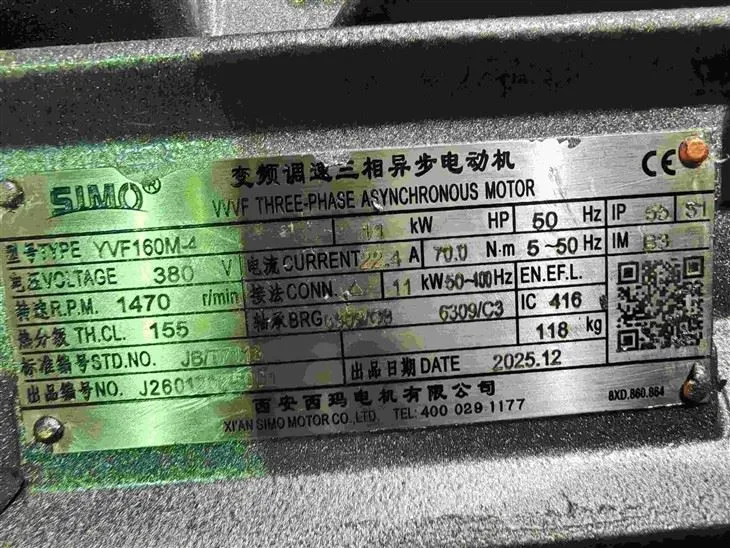
If you're in the market for an IE2 electric motor, I'd love to help you find the right enclosure for your needs. We offer a wide range of motors, including the YVF160M-4 VVVF Three-phase Asynchronous Motor 380 V and the YE5-315L 6 Pole Motor Rpm 50hz 110kw. Contact us to discuss your requirements and let's work together to find the perfect motor for your application.
References
- Electrical Engineering Handbook, Third Edition
- Motor and Drive Systems Handbook