


High-Efficiency Motors: Identification Methods For Users
Apr 27, 2026
Leave a message
High-efficiency motors in China are regulated by energy label policies for basic series models to promote their popularization. They are required to complete filing on the China Energy Label Network and bear standardized energy labels on the motor housing for public supervision and easy inspection by buyers and end users.
Common models including YE2, YE3, YE4 and YE5 show different energy-saving attributes amid standard updates, even with identical nominal efficiency parameters. Their energy-saving performance must be defined in accordance with the current valid national standard GB 18613. Three energy efficiency grades are specified for motors, among which Grade 1 represents the optimal energy efficiency, and Grade 3 sets the minimum efficiency threshold for market access. Only motors meeting the Grade 3 limit are allowed for commercial sales in domestic industrial and commercial markets.
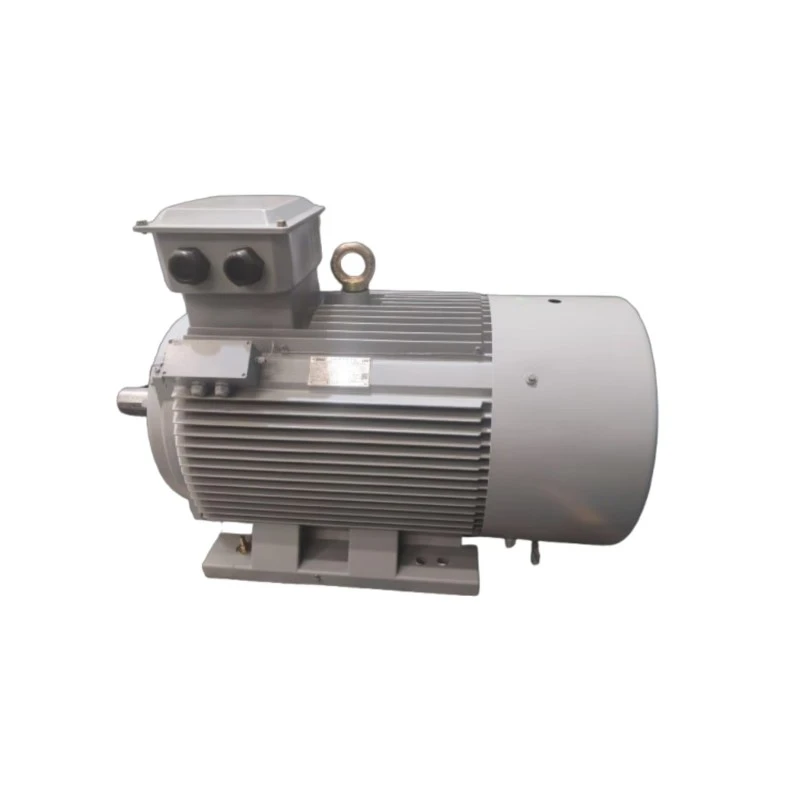
Not all motors fitted with energy labels can be recognized as high-efficiency and energy-saving products. Motors within the regulatory scope must complete official filing and be attached with QR-coded exclusive energy labels before circulation. As stipulated by relevant rules, motors with Grade 3 energy labels are excluded from energy-saving product lists, while those with Grade 2 and Grade 1 labels are officially defined as qualified energy-saving motors with outstanding power-saving performance.
High-efficiency motors classification varies greatly under different editions of GB 18613. Under the current 2020 version, YE3 motors correspond to international IE3 efficiency class and Grade 3 energy efficiency, which are only qualified for mass production rather than being energy-saving products. YE4 and YE5 motors reach IE4 and IE5 efficiency levels respectively, with Grade 2 and Grade 1 energy efficiency credentials, so they are certified as standard high-efficiency energy-saving motors for long-term industrial operation.
In the superseded 2012 edition of GB 18613, YE2 motors satisfied only the minimum efficiency requirements, and both YE3 and YE5 motors were categorized as energy-saving types. The official energy efficiency grading for all motor series has been fully adjusted after the new standard took effect to adapt to global energy conservation trends.
High-efficiency motors procurement requires buyers to master relevant industry specifications to control product acceptance standards. Many motor manufacturers provide third-party energy-saving certifications to prove their product efficiency superiority, and the validity of these credentials needs careful verification by users to achieve rational and transparent procurement, reduce operation costs and lower long-term energy consumption.