


Motor Innovation Application Cases and Solutions
Nov 11, 2025
Leave a message
On October 31st, the Ministry of Technology held a report meeting on the successful motor innovation results of H355-2 motor vibration improvement.Mr. Hao, general manager of the company, was specially invited to participate in the meeting.
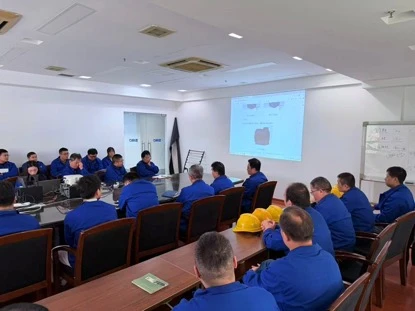
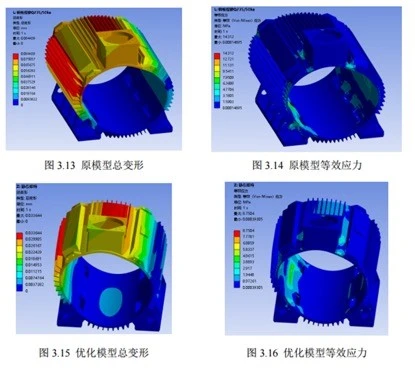
This report will be delivered by Zhao Hua, a graduate student who is a member of the Project research Group of the Ministry of Technology. At the report meeting, Representative Zhao Hua reported to the customer (Everbright Environmental Protection Co., Ltd.) that the low-frequency vibration of the YVFE4-355M-2 three-phase asynchronous motor is more serious during use.In order to solve this problem, consider optimizing the structure of each component of the motor.Through solid mechanical skills, she used finite element modal analysis to analyze and obtain detailed theoretical data, and analyzed and discussed the rotor, stator, end cap, shaft, and base of the motor one by one. In the end, the research team determined that the vibration of the base is the most important factor, dealt with the risks and challenges, and found out the problem of the large vibration of the base. Based on the results of the analysis, the research team communicated with the designers and combined with the actual production and processing, adopted a combination strategy of motor innovation "changing the base material, wall thickness, optimizing the layout and size of the cooling ribs, and canceling the intermediate ventilation cavity" to reduce the vibration value.From the current casting base to the base of steel plate welded parts, and increase the wall thickness of the base, reduce the number of cooling ribs, and apply to the product. After the designer's pattern is improved, the production workshop strictly processes according to the pattern, and the effort pays off. In the end, after inspection and testing, this motor achieved the expected vibration effect and was satisfied by the user.
The meeting emphasized that the vibration improvement of AC H355 level 2 motor is a typical example. We must learn the pre-analysis of motor product design, and continuously deepen the process of learning advanced methods to predict product results. One is to use finite element modal analysis technology to work hard on deep learning and meticulous understanding; the other is to learn to promote dryness, and use finite element modal analysis on other product specifications to put pressure on yourself. Respond to the market, adhere to the position, aim at the direction of design and research, apply what you have learned, and transform the design results and spirit into an unswerving attitude of struggle to promote the direction of design product ideas and the effectiveness of processing work.
At the meeting, motor product designers expressed their opinions and put forward their own design ideas and design problems one after another. From AC to DC to high-voltage motor analysis, they focused on the core vibration, temperature rise and other important indicators, and used finite element modal analysis to control the pre-design analysis, strengthen cost accounting, and strengthen communication under the optimal design plan to design and produce high-quality motor products. This report will be vivid and exciting, rich in connotations, and thorough analysis. It will make a good start for further technological improvement and motor innovation, especially for the preliminary design of special motors. It provides direction and guarantee, and has strong guiding significance.