


Principles Of Three-Phase Asynchronous Motors: Unlocking The Core Code Of Industrial Power
Apr 15, 2026
Leave a message
With the acceleration of the Industry 4.0 process, three-phase asynchronous motors, as the core power equipment in various fields of the national economy, have been applied in industries such as mining, chemical industry, textiles, and metallurgy, becoming the "heart" driving industrial production. However, many practitioners still have cognitive blind spots about their core principles and structural composition. Today, we will comprehensively popularize the core knowledge of three-phase asynchronous motors to help industry professionals accurately understand equipment characteristics.
A 3 phase asynchronous motor is a type of induction motor. Its core lies in being powered by 380V three-phase alternating current (with a phase difference of 120 degrees) connected simultaneously, realizing the conversion of electrical energy to mechanical energy through the principle of electromagnetic induction. The term "asynchronous" in its name originates from the fact that the rotor and the stator rotating magnetic field rotate in the same direction but at different speeds, with a certain slip ratio (usually 1%-5%). This characteristic enables it to automatically adjust the load: when the load increases, the slip ratio increases, the induced current strengthens, and the output torque rises accordingly, ensuring stable power output.
In terms of structure, three-phase asynchronous motors are mainly composed of two parts: the stator and the rotor, supplemented by basic components such as a frame, bearings, and a rotating shaft. As the fixed part, the stator consists of a stator core, a stator winding, and a frame, whose core function is to generate a rotating magnetic field. The stator core is made of 0.5mm thick silicon steel sheets laminated together, which can effectively reduce eddy current and hysteresis losses; as the rotating part, the rotor is composed of a rotor core, a rotor winding, and a rotating shaft, which is responsible for generating induced current and forming electromagnetic torque to realize energy conversion.
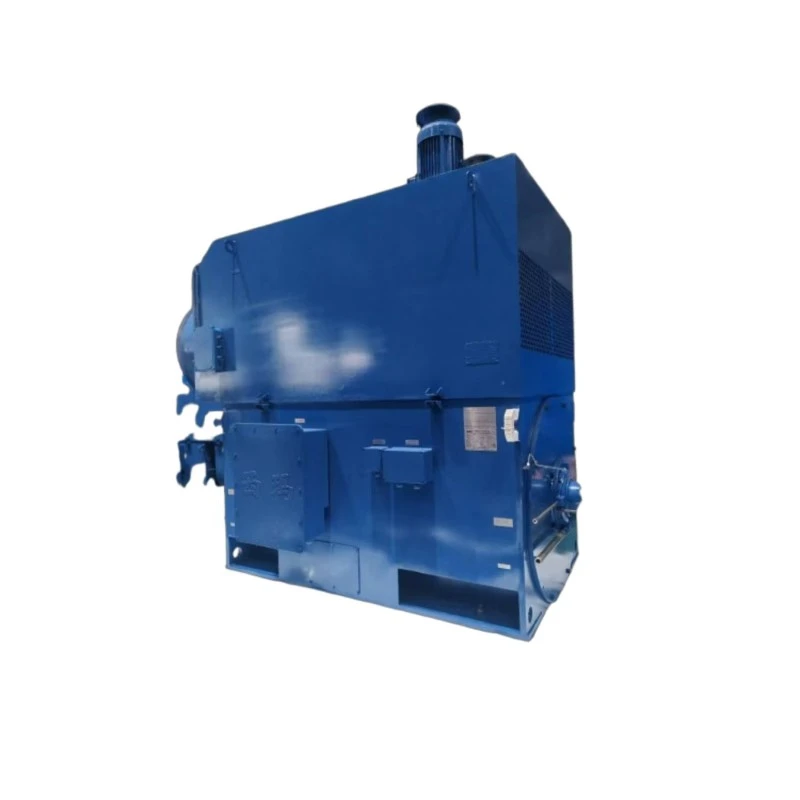
Divided by rotor structure, three-phase asynchronous motors can be classified into two types: cage-type and wound-rotor. The cage-type rotor has a simple structure, reliable operation, and low price. Made of cast aluminum or copper bars, it does not require external power supply and is widely used in small and medium-sized industrial scenarios; the wound-rotor, similar to the stator winding, is connected to an external rheostat through slip rings and brushes, which can improve starting performance and adjust speed, making it suitable for large industrial equipment that requires heavy-load starting and speed regulation.
Compared with single-phase asynchronous motors, three-phase asynchronous motors have advantages such as good operating performance, excellent energy-saving effect, and material saving. In addition, they have no wearing parts such as brushes and commutators, resulting in a low failure rate. The full-life cycle maintenance cost is more than 40% lower than that of DC motors, making them the most widely used motor type in the industrial field currently. Understanding their core principles and structure can not only help practitioners better operate and maintain equipment, but also provide a scientific basis for equipment selection and upgrading.